
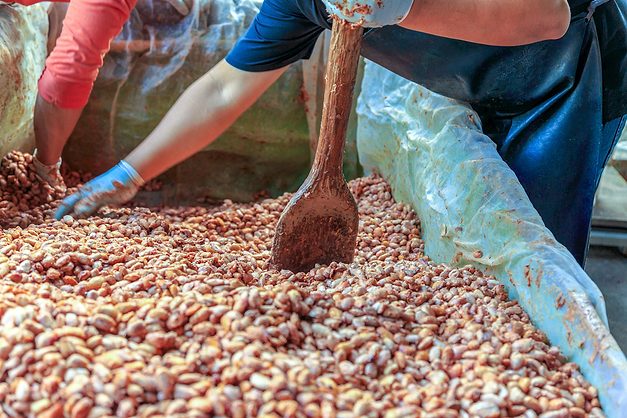
Fermentation is the most critical step in developing the flavor of cocoa. Without proper fermentation, cocoa beans remain bitter, flat, and unsuitable for quality chocolate production.
While fermentation is typically done at farm level in large batches, it is entirely possible to ferment cocoa beans at home on a small scale — if done carefully and correctly.
This guide outlines a simple 5-step process to help you achieve proper fermentation and unlock the true flavor potential of cocoa.
What Is Cocoa Fermentation?
After harvesting, cocoa beans are covered in a white, sugary pulp. Fermentation is a natural microbial process that:
- Breaks down the pulp
- Generates heat
- Develops flavor precursors
- Reduces bitterness
This process is essential for creating the chocolate flavor we recognize.
Step 1: Collect Fresh Cocoa Beans
Start with freshly extracted cocoa beans directly from ripe pods.
Key Points:
- Beans should be covered in pulp
- Use within 24 hours of harvesting
- Avoid damaged or moldy beans
Freshness is critical — dried or old beans cannot be fermented effectively.
Step 2: Prepare a Fermentation Container
Use a small container that can retain heat while allowing limited airflow.
Options:
- Wooden box (ideal)
- Plastic container with holes
- Insulated basket lined with banana leaves
Important:
- Line the container with banana leaves or cloth
- Cover the top to trap heat
- Allow drainage of liquid
Maintaining warmth is essential for proper fermentation.
Step 3: Start the Fermentation Process
Place the beans into the container and cover them.
What Happens:
- Natural yeasts begin breaking down sugars
- Temperature rises (can reach 45–50°C)
- Alcohol and acids are produced
Duration:
- Typically 5 to 7 days
Do not disturb the beans too early — initial microbial activity is crucial.
Step 4: Turn the Beans
After 2–3 days, gently mix or turn the beans.
Why Turning Matters:
- Introduces oxygen
- Ensures even fermentation
- Prevents uneven flavor development
For small batches, turning once or twice during the process is sufficient.
Step 5: Dry the Beans Properly
Once fermentation is complete, drying stops the process and preserves the beans.
Drying Methods:
- Sun drying (preferred)
- Indoor drying with airflow
Key Indicators:
- Beans turn brown
- Moisture content reduces significantly
- Outer shell becomes firm
Drying usually takes 5–10 days depending on conditions.
Signs of Proper Fermentation
Well-fermented cocoa beans will show:
- Brown internal color (not purple)
- Reduced bitterness
- Pleasant cocoa aroma
- Slight acidity
Cutting a bean open is the easiest way to check quality.
Common Mistakes to Avoid
- Using old or dry beans
- Poor temperature control
- Skipping turning process
- Over-fermentation (leads to off-flavors)
- Incomplete drying (causes mold)
Attention to detail is key for good results.
Small-Scale vs Commercial Fermentation
Home fermentation differs from large-scale processing:
| Factor | Home | Commercial |
|---|---|---|
| Volume | Small batches | Large bulk |
| Control | Manual | Structured systems |
| Consistency | Variable | Standardized |
Despite these differences, careful execution can produce high-quality results at home.
Why Fermentation Matters So Much
Fermentation determines up to 70% of the final chocolate flavor.
It directly influences:
- Aroma
- Taste complexity
- Bitterness level
- Overall quality
Without proper fermentation, even high-quality cocoa beans cannot produce good chocolate.
Conclusion
Fermenting cocoa beans at home is both a science and an art. With the right approach, it is possible to replicate key elements of the traditional process on a small scale.
By following these five steps:
- Use fresh beans
- Prepare the right container
- Allow controlled fermentation
- Turn the beans properly
- Dry them thoroughly
you can develop rich, flavorful cocoa suitable for homemade chocolate or experimentation.